

Markets Slide as War Escalation and Stagflation Fears Weigh on Stocks
Stocks had another volatile week as the ongoing conflict between the United States and Iran continued to intensify and weigh on global markets.
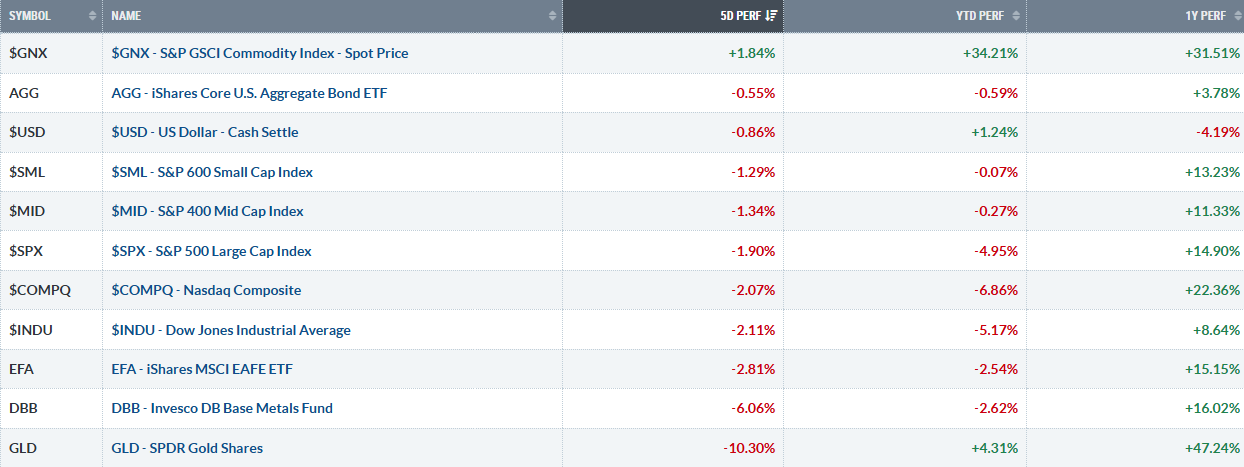
The S&P 500 fell nearly -2% last week and is now down close to -5% for the year.
The biggest driver behind the market’s weakness has been rising oil prices. Continued disruptions and escalating attacks tied to the Strait of Hormuz have kept oil near multi-year highs, increasing concerns about inflation and further delaying hopes for interest rate cuts.
At the same time, recent economic data is adding to stagflation concerns- a period of slowing growth combined with persistent inflation. Manufacturing data softened notably, while Producer Price Index (PPI) readings came in hotter than expected, signaling that price pressures (especially in services) remain elevated even as growth shows signs of cooling.
While the headlines have been dramatic, the market reaction has mostly followed a simple pattern: when oil moves higher, stocks tend to move lower.
The recent break below key technical levels suggests a more cautious environment in the near term.
Rates, Dollar & Commodities
Energy markets remain the center of attention. Oil prices continued to push higher last week as the conflict escalated, with disruptions around the Strait of Hormuz keeping supply concerns elevated. Brent crude surged sharply, while WTI crude also posted strong gains on the week.
The key factor remains the Strait of Hormuz, one of the world’s most important oil shipping routes. If shipping conditions improve, oil prices could decline quickly. If disruptions persist, prices may remain elevated and continue to pressure markets.
The U.S. dollar was volatile throughout the week, briefly pushing above 100 on the Dollar Index following the Fed meeting before pulling back and finishing slightly lower overall. Treasury yields moved higher, with the 10-year Treasury rising to around 4.4%, reflecting growing concerns that inflation may remain elevated longer than expected.
Gold saw a sharp and somewhat surprising decline, posting one of its worst weekly performances in decades as rising yields and a stronger dollar earlier in the week pressured the metal. Copper prices also fell, signaling increasing concerns about global economic growth.
Takeaway
Right now, the main issues that appear to be influencing the market are:
- The U.S.–Iran conflict and oil prices
• Rising inflation uncertainty coupled with slowing economic growth (stagflation risk)
The most important factor for markets remains oil prices.
If oil stays elevated near or above $100 per barrel, it could continue to fuel inflation and slow economic growth. However, if oil falls back toward lower levels, much of the pressure on stocks could ease.
Outside of energy, the economic backdrop remains mixed. The labor market continues to show stability, with jobless claims remaining relatively low, reinforcing the “no hire, no fire” environment. However, weaker manufacturing data and rising input costs suggest the economy may be cooling.
This all seemingly suggests the economy is slowing but not breaking, at least for now.
This Week – What Matters for Markets
While this week is lighter on major economic events, there are still several important reports to watch.
Investors will be focused on:
• Manufacturing and Services PMI data
• Consumer sentiment and inflation expectations
• Oil inventory data and prices
Markets will be looking for signs that growth is stabilizing, and inflation pressures are not accelerating further.
Any data that reinforces slowing growth alongside persistent inflation could increase volatility and add to stagflation concerns.
Broad Overview
The market is currently navigating multiple uncertainties at once.
Geopolitical tensions, elevated energy prices, and uncertainty around future interest rate policies are all contributing to increased volatility.
At the same time, the underlying economy still shows some resilience. The labor market remains stable, and while inflation is elevated, it has not yet accelerated uncontrollably.
Because of that, the current environment still appears to be more of a period of adjustment and volatility rather than the start of a prolonged downturn.
However, risks are clearly rising. If oil prices remain elevated and growth continues to soften, stagflation could become a more dominant theme.
Until energy markets stabilize and geopolitical tensions ease, investors should expect continued market swings in the weeks ahead.
If you have any questions about your portfolio or the market outlook, please contact your CIAS Investment Adviser Representative.
Important Disclosures:
Past performance is not indicative of future results. This material is not financial advice or an offer to sell any product. The statements contained herein are solely based upon the opinions of Edward J. Sabo and the data available at the time of publication of this report, and there is no assurance that any predicted or implied results will actually occur. Information was obtained from third-party sources, which are believed to be reliable, but are not guaranteed as to their accuracy or completeness.
The actual characteristics with respect to any particular client account will vary based on a number of factors including but not limited to: (i) the size of the account; (ii) investment restrictions applicable to the account, if any; and (iii) market exigencies at the time of investment. Capital Investment Advisory Services, LLC (CIAS) reserves the right to modify its current investment strategies and techniques based on changing market dynamics or client needs. The information provided in this report should not be considered a recommendation to purchase or sell any particular security. There is no assurance that any securities discussed herein will remain in an account’s portfolio at the time you receive this report or that securities sold have not been repurchased. The securities discussed may not represent an account’s entire portfolio and in the aggregate may represent only a small percentage of an account’s portfolio holdings. It should not be assumed that any of the securities transactions, holdings or sectors discussed were or will prove to be profitable, or that the investment recommendations or decisions we make in the future will be profitable or will equal the investment performance of the securities discussed herein.